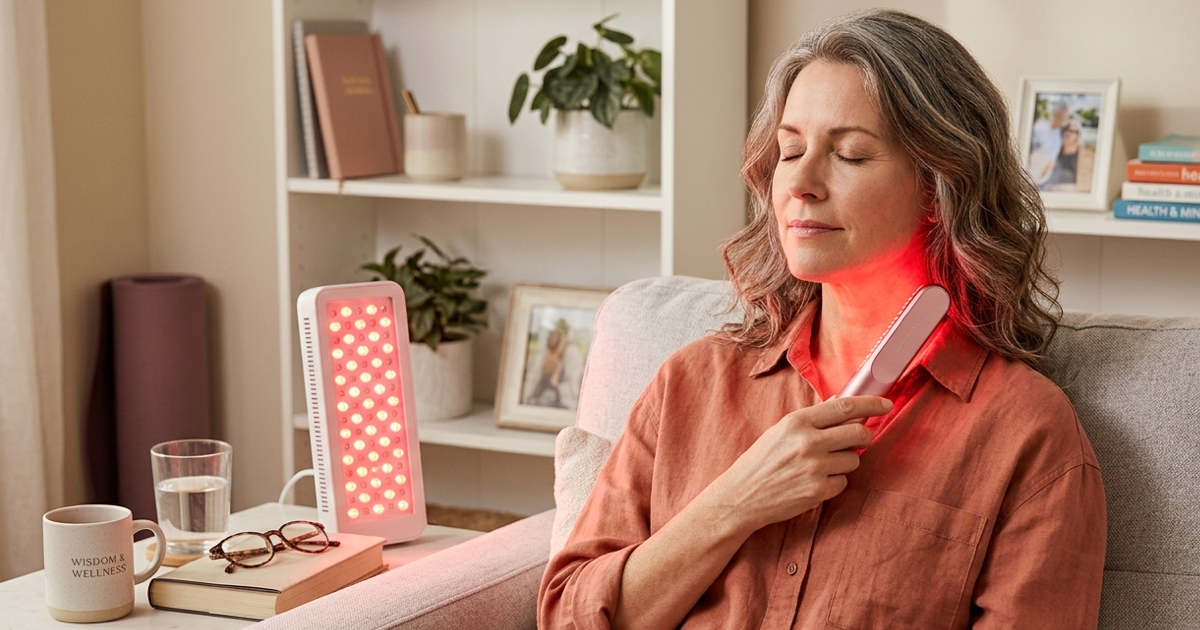
Discover how red light therapy might benefit women aged 40 to 60.Learn its effects on skin health, joint pain, mood, sleep, and hair growth. Explore studies, real-world experiences, and top concerns.
Is Red Light Therapy Worth It for Midlife Women?
The midlife journey for women is often a blend of wisdom gained, bodies evolving, and a search for new habits that support changing needs. As conversations around self-care continue to grow, and research shows that women between ages 40 and 60 are especially motivated to invest in both physical and mental health, the question of which therapies truly support midlife well-being becomes increasingly important.
Red light therapy (RLT), also known as low-level light therapy, has attracted significant attention, with celebrity endorsements and at-home devices promising benefits for skin, mood, energy, and overall wellness.
As curiosity increases, so do the questions: Is red light therapy simply another wellness trend, or does it offer real science-backed benefits—especially for women navigating perimenopause, menopause, or the realities of aging skin and changing bodies? Just as importantly, are there meaningful risks women should know about, particularly when using home devices?
How Does Red Light Therapy Work?
Red light therapy involves exposure to low wavelengths of red or near-infrared light that penetrate the skin’s surface. Researchers believe this light may stimulate mitochondria within cells, increasing cellular energy production in the form of adenosine triphosphate (ATP). This process may support tissue repair, reduce inflammation, and improve circulation. While many studies remain small, the biological mechanism is considered plausible.¹,⁴,⁵
Devices range from clinic-based panels to smaller at-home masks, wands, and handheld units, commonly used for skin concerns, joint and muscle discomfort, or fatigue. The noninvasive nature of RLT is especially appealing to people who prefer to avoid surgical or pharmaceutical interventions.
Potential Benefits for Midlife Women
A growing number of studies suggest benefits that are especially relevant to midlife women.
Skin Health
As women age, collagen production slows, often leading to wrinkles, skin laxity, and changes in texture. Several clinical trials have found that red light therapy may help stimulate collagen production, reduce wrinkle depth, and improve overall skin tone and smoothness. A 2021 review published in Lasers in Medical Science reported that participants using photobiomodulation experienced significant improvement in photoaged facial skin after several months of regular sessions.¹
Joint and Muscle Discomfort
Menopause and aging often bring increased stiffness, soreness, and joint discomfort. Research published in Pain Research and Management found that low-level light therapy may provide measurable relief for osteoarthritis symptoms, likely due to reduced inflammation and improved circulation.²
Mood and Sleep
Some early studies suggest that regular red light exposure may improve mood and help reduce symptoms of depression or anxiety. This may be partly related to circadian rhythm regulation and better sleep quality—two common challenges for women in midlife experiencing hormonal fluctuations.³,⁴
Hair Growth
Hair thinning and androgenic alopecia are common concerns during midlife. Red light therapy, particularly at specific wavelengths, has shown modest effectiveness in improving hair density and stimulating regrowth in randomized controlled trials.⁵
What’s Real and What’s Hype?
Despite growing excitement, it is important to separate strong evidence from marketing claims. Most studies showing benefits have used professional-grade devices, closely monitored treatment protocols, and relatively small participant groups. While the results are promising, they may not always translate to inexpensive at-home gadgets.³,⁴
Claims that red light therapy can “cure” complex conditions or reverse aging entirely should be approached with caution. Experts generally agree that while RLT may support skin rejuvenation and pain relief, it works best as part of a broader wellness approach that includes movement, nutrition, sleep, and stress management.³,⁴
RLT is generally considered safe when used correctly. Possible side effects may include mild redness, temporary irritation, or eye discomfort. People with photosensitivity disorders, active cancers, or those taking medications that increase light sensitivity should speak with a healthcare provider before starting treatment.³,⁴
Real-World Experiences
In community forums and online wellness spaces, midlife women describe a wide range of experiences. Some report improvements in joint pain, brighter skin, or a general sense of relaxation after several weeks or months of regular use.
Others describe disappointment, especially when highly marketed results did not appear or when benefits were difficult to maintain without access to high-quality devices and consistent settings.
Many users note that patience is essential—the benefits, when they occur, tend to be gradual and require regular sessions over time. This reflects published findings showing that most positive outcomes appear after 8 to 12 weeks or more of consistent use.¹,⁴
Things to Consider Before Trying Red Light Therapy
For those considering adding RLT to their wellness routine, several practical points are worth keeping in mind:
● Device quality and safety: Professional medical devices are subject to stronger regulatory oversight, but not all home-use products are equal. Look for FDA-cleared devices and independent reviews.³,⁴
● Time commitment: Many studies used therapy 2 to 5 times per week, with sessions lasting between 5 and 20 minutes. Consistency appears to be one of the most important factors for results.¹
● Cost: Clinic-based treatments can be expensive, while home devices require a larger one-time investment but may produce less dramatic results.
● Integration with other habits: RLT works best as a complement—not a replacement—for proven health practices like exercise, sun protection, balanced nutrition, and quality sleep.³,⁴
For many midlife women, red light therapy may offer real but modest support. The best results usually come when expectations remain realistic and the therapy is used as part of a broader strategy for long-term well-being.
This article is for informational purposes only and is not medical advice. Always consult your healthcare provider regarding any questions or concerns about your health or treatment options.
References
1. Avci P, Gupta A, Sadasivam M, et al. Efficacy of photobiomodulation (red light therapy) in photoaged facial skin. Lasers Med Sci. 2021;36(2):1-10.
2. Stausholm MB, Naterstad IF, Joensen J, et al. Efficacy of low-level laser therapy for osteoarthritis: a systematic review and meta-analysis. Pain Res Manag. 2019;2019:9618908. doi:10.1155/2019/9618908
3. Harvard Health Publishing. Can red light therapy improve your health? Accessed April 26, 2026. https://www.health.harvard.edu/blog/can-red-light-therapy-improve-your- health-2020112321476
4. Cleveland Clinic. Red light therapy: what it is, benefits, and risks. Accessed April 26, 2026. https://health.clevelandclinic.org/what-is-red-light-therapy/
5. Hamblin MR. Low-level laser (light) therapy (LLLT) in skin: stimulating, healing, restoring. Semin Cutan Med Surg. 2017;36(4):153-158. https://www.ncbi.nlm.nih.gov/pmc/articles/PMC5523874/